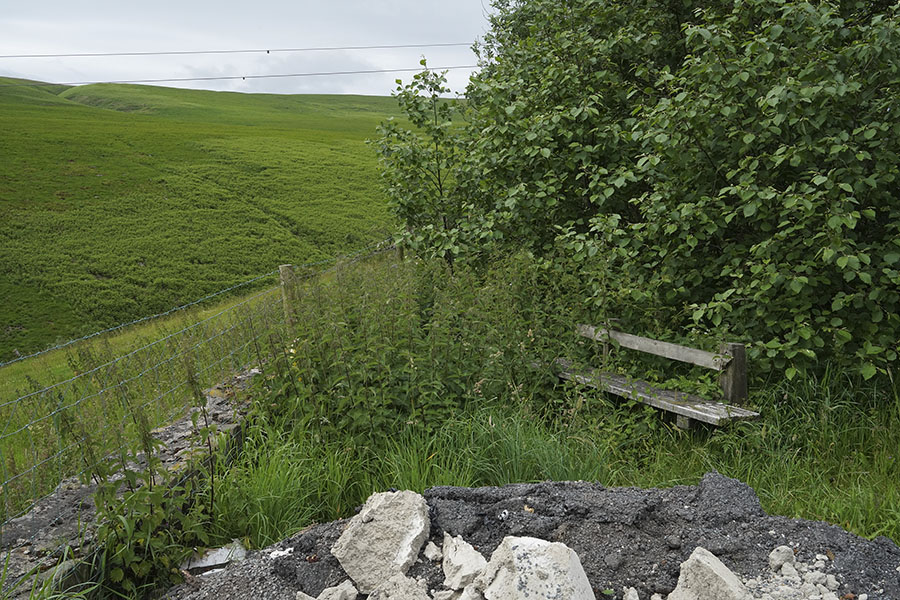
Benches, so ordinary they are almost unseen, take on a new significance when viewed not as relics of the past but as active participants in the present, small structures shaping how people gather, rest, and connect. Their removal, like the disappearance of larger communal spaces, carries consequences that are easy to overlook yet deeply felt.
Benches occupy a modest but essential place within shared environments. They offer rest without obligation, pause without purchase. They allow us to sit between moments, to watch, reflect, or simply exist without needing to justify our presence. In their stillness, they create opportunities for conversation, observation, and quiet connection. A bench can hold a lifetime of unrecorded narratives: an elderly couple returning to the same spot each afternoon; a stranger offering directions; a worker pausing between shifts. These are fleeting, often invisible interactions, yet they form part of the subtle architecture of community.
In recent years, benches have increasingly become sites of tension. Their removal from public spaces , often justified as discouraging loitering or addressing homelessness, reflects a shift in how we perceive and manage shared environments. Seating, once a symbol of welcome, is reframed as liability. Rest itself becomes regulated. What was once a gesture of hospitality is now treated as a problem to be solved. This project asks what is lost in that transition.
Through photography, I documented not only the physical presence or absence of benches, but the atmosphere surrounding them. Some images capture spaces where benches remain quietly inhabited, sometimes empty, yet full of potential. Others record their disappearance, revealing environments subtly altered: less hospitable, less generous, less human. What emerges is not a statement of protest but a series of observations. The work invites viewers to consider how small design decisions shape social experience, and how the removal of something as simple as a bench can diminish opportunities for connection, particularly for those who rely most on shared public space.
At its core, this project reflects on belonging. A bench does not ask who you are, where you have come from, or how long you intend to stay. It offers a place, nothing more, nothing less. In doing so, it performs a quiet but radical act: acknowledging our shared right to occupy space. In an increasingly regulated and transactional world, that gesture feels significant.
The question this work leaves is simple, yet far-reaching: if we begin to remove the places where we are allowed to pause, what happens to the spaces where we are allowed to belong?
Trevor Griffiths